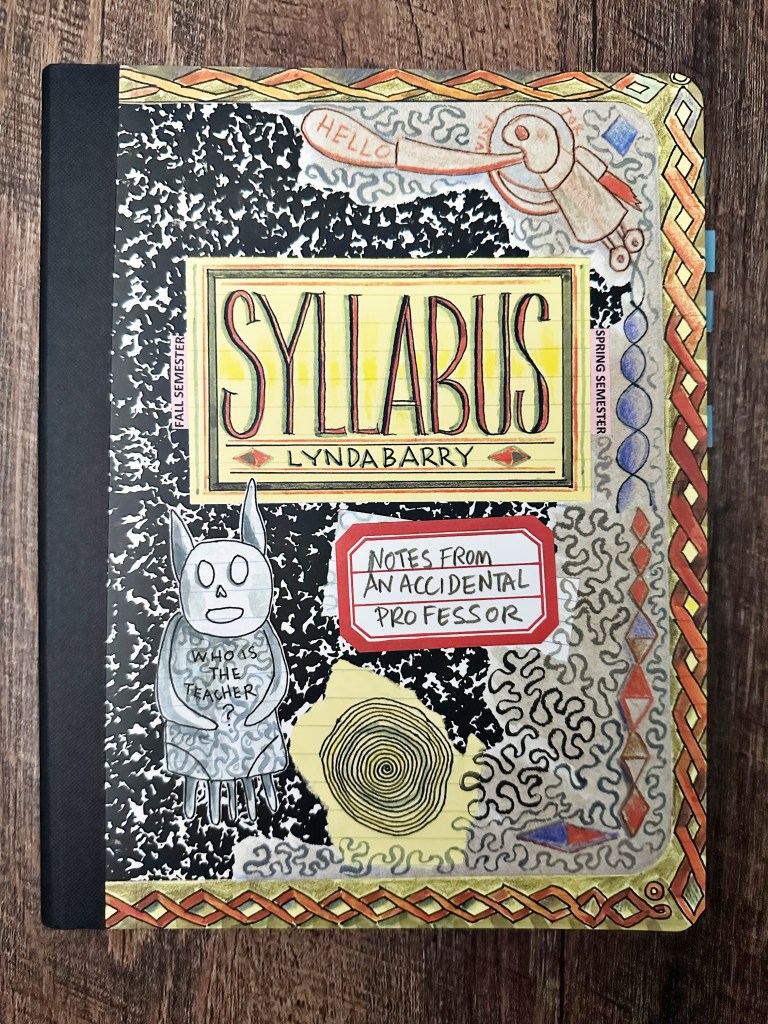
First and foremost, I use a composition notebook for my creative notebook, because Lynda Barry had her students do it in Syllabus. That’s why I started. But I kept it up because it worked for me.
Here are the reasons I love a composition notebook, specifically:
- Perfect size. The page size is not too big and it’s not too small. The book itself usually has about 200 pages, which provides plenty of room without being enormous.
- Inexpensive. It’s cheap, especially around back to school time (now!), and it’s easy to find.
- Low pressure. Because it’s cheap, I don’t feel precious about it. I have very expensive and beautiful notebooks that I don’t use because I feel I need to save them and fill them with only the most beautiful things. Not so with a composition notebook.
- Classic look. Let’s appreciate its low-key beauty, shall we?
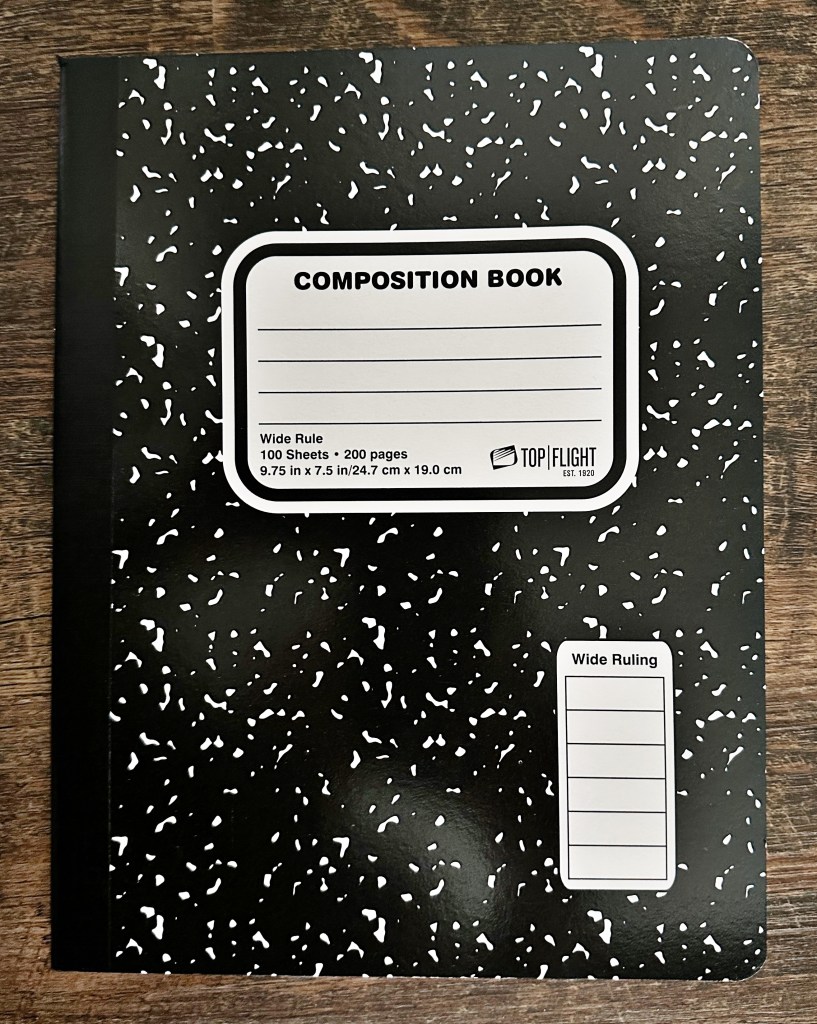
- Sturdy. The pages are sewn in, and it has a hard cover. So it can handle whatever you throw at it.
- Easy to use. It can fold back on itself. There are no rings or spirals to get in the way.
- Paper. This is thin cheap paper, yes. But I find it is sufficient, even with wet media, if I’m careful. And it’s easy to glue two pages together as needed.
- Lines. I also love the lined pages. I can ignore the lines when I want to, but they are there when I need them.
A composition notebook is a cheap and easy way to start a creative notebook, but use whatever works for you. Go smaller; go bigger; go handmade; or go for luxury. The notebook itself does not matter. What matters is putting things – your thoughts and ideas and random life stuff – down on paper.
Keeping a physical creative notebook encourages me to play. I use it for my writing exercises and notes and making lists and creating collages and swatching new supplies. I use it to journal about my feelings and my days (though I do this in other places too). I use it as a scrapbook and glue book. I use it for anything and everything.
 Textual Play