Creativity is often treated as a mythic creature that may or may not arrive on any given day, as something we mortals have no control over. But, in my experience, creativity comes from discipline. It is discipline. It is showing up and doing the work. Over and over again.
That doesn’t mean that creativity is or should be drudgery. It is simply consistency.
Here are some quotes about creativity and discipline I’ve come across recently:
“The practice demands that we approach our process with commitment. It acknowledges that creativity is not an event, it’s simply what we do, whether or not we’re in the mood.”
I’m driven to get the things I’m excited about out of my head. …
I can be in opposition to my inherent laziness, and build a discipline around, not even the work of writing, but the work of joyful extraction. And to present it like that, and to put it like that, offers me a better runway to it.
Don’t loaf and invite inspiration; light out after it with a club, and if you don’t get it you will nonetheless get something that looks remarkably like it.
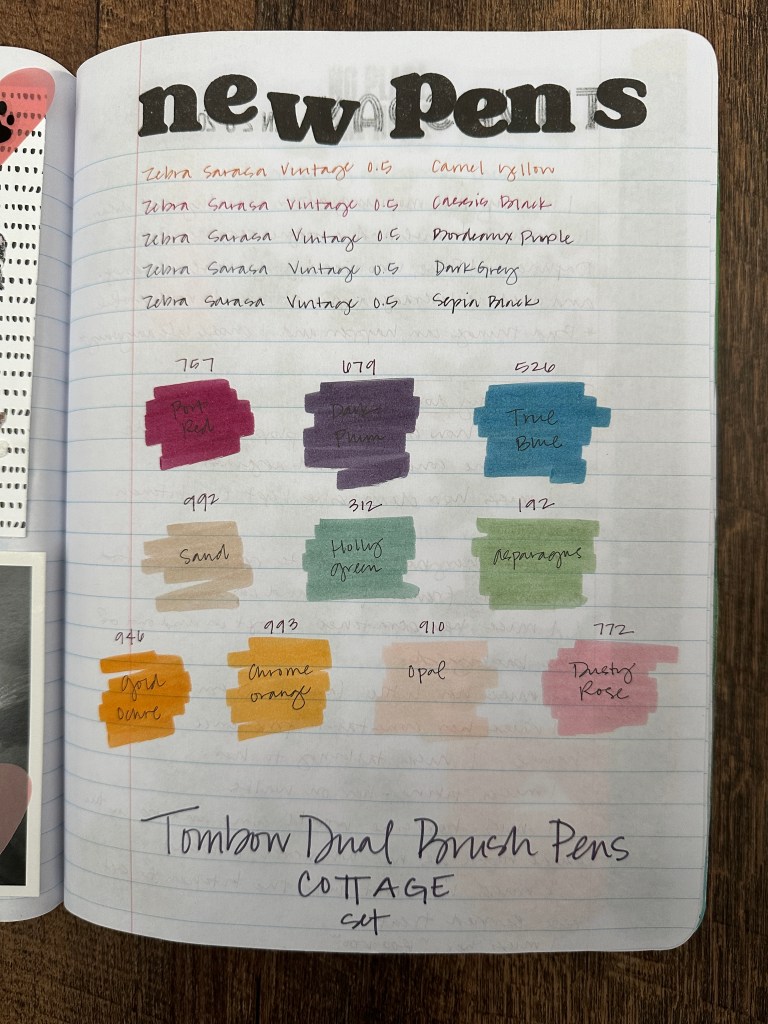
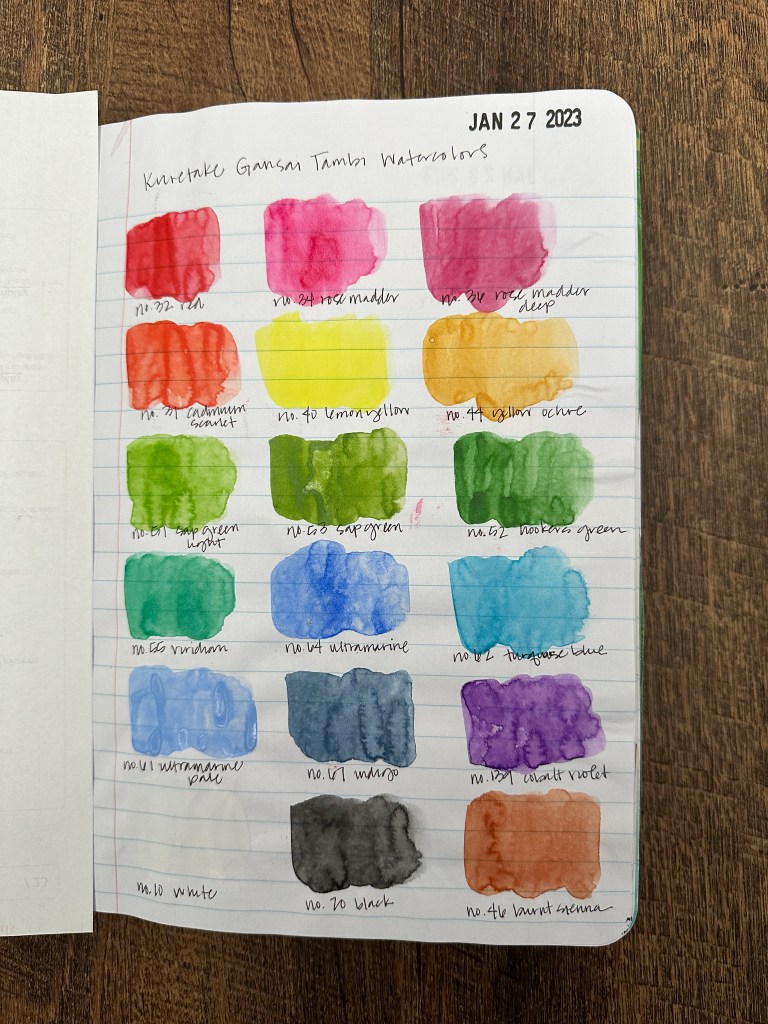
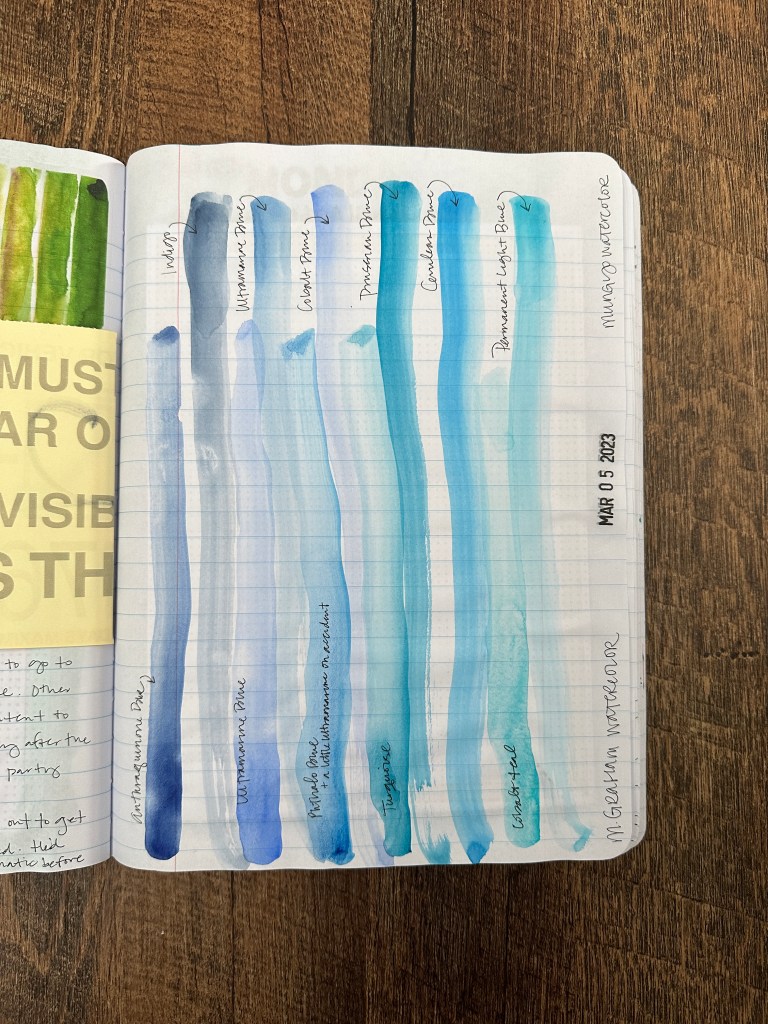
A creative notebook is a place where there are no rules, where you can just put anything and everything that comes up in life. But that “no rules” thing can be hard to adjust to. So let’s ease in today with some SWATCHING.
swatching verb To test out art and writing supplies to see how they do in your notebook.
Supply List
Your notebook
A category of writing or arting supply (e.g., pens, markers, watercolors, highlighters, washi tape, ink pads, paint sticks, acrylic paints, etc.)
Steps
Find a page in your notebook. If you’re in a new notebook, skip that very first scary blank page and head right to the second page. If you’re already in a notebook, just head to the first available page.
Gather your writing/arting supplies. Now that you have the page all picked out, collect the category of supplies you have chosen.
Swatch. Yep. It’s just that simple. Start making marks in your notebook with the selected supplies. It does not matter how you do it. You can make a list; you can make circles or swirls or cats. You can go in rainbow order or random order or the order dictated by the next person you see. Anything goes. Just put the supplies on the page and make the marks.
Here are a number of examples from my notebooks.
I pull out this exercise often: when I’m stuck, when I start a new notebook, when I get a new supply, or, shockingly, when I actually need swatches of something. This is a good one to keep in your arsenal.
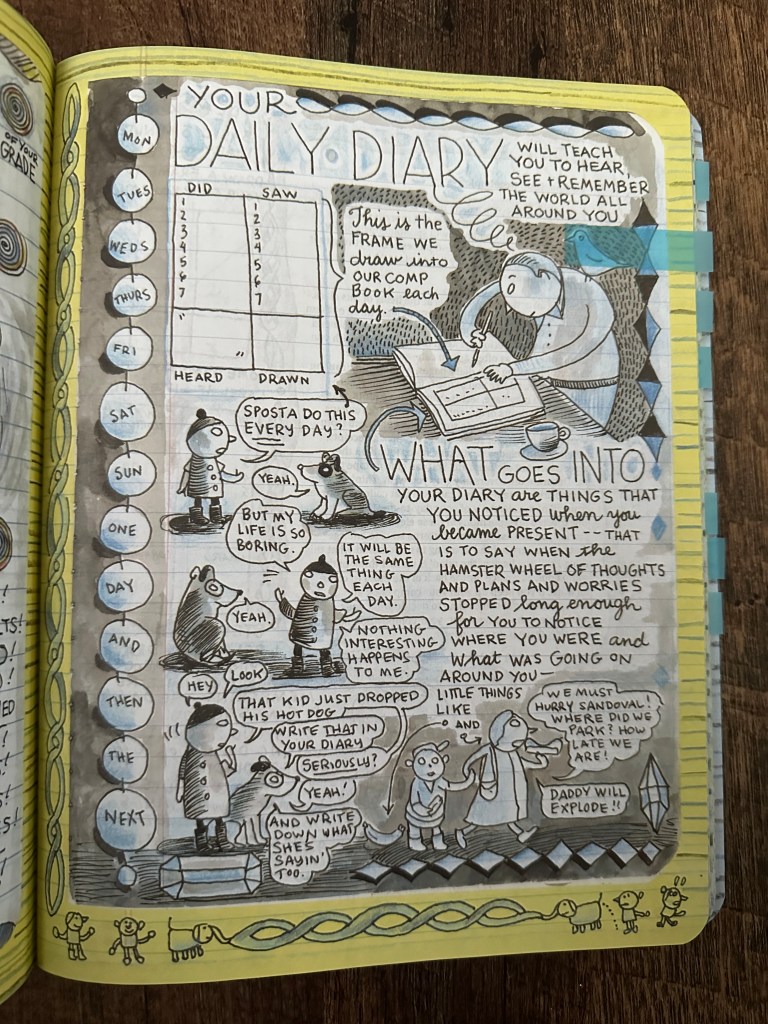
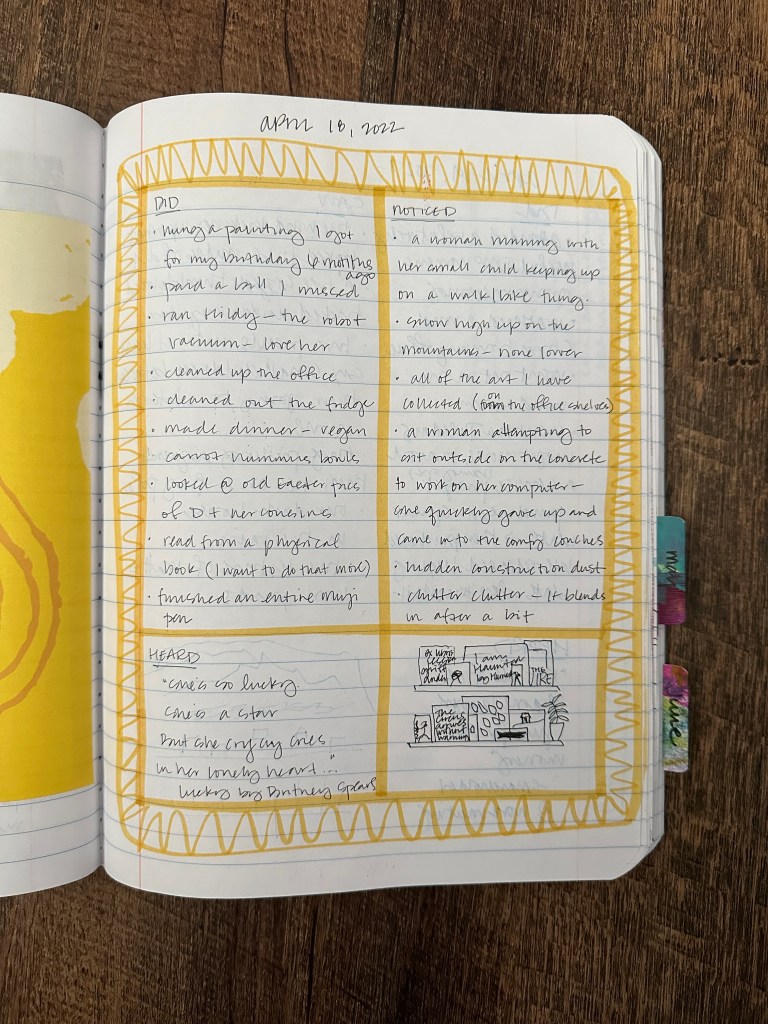
In her creative notebook classes, Lynda Barry requires her students to keep what she calls a “daily diary.”
The exercise involves dividing a page into four quadrants and filling them out as follows:
The top left is for a list of things you did that day.
The top right is for a list of things you saw that day.
The bottom left is for something you heard that day.
The bottom right is for a quick doodle of something you saw that day.
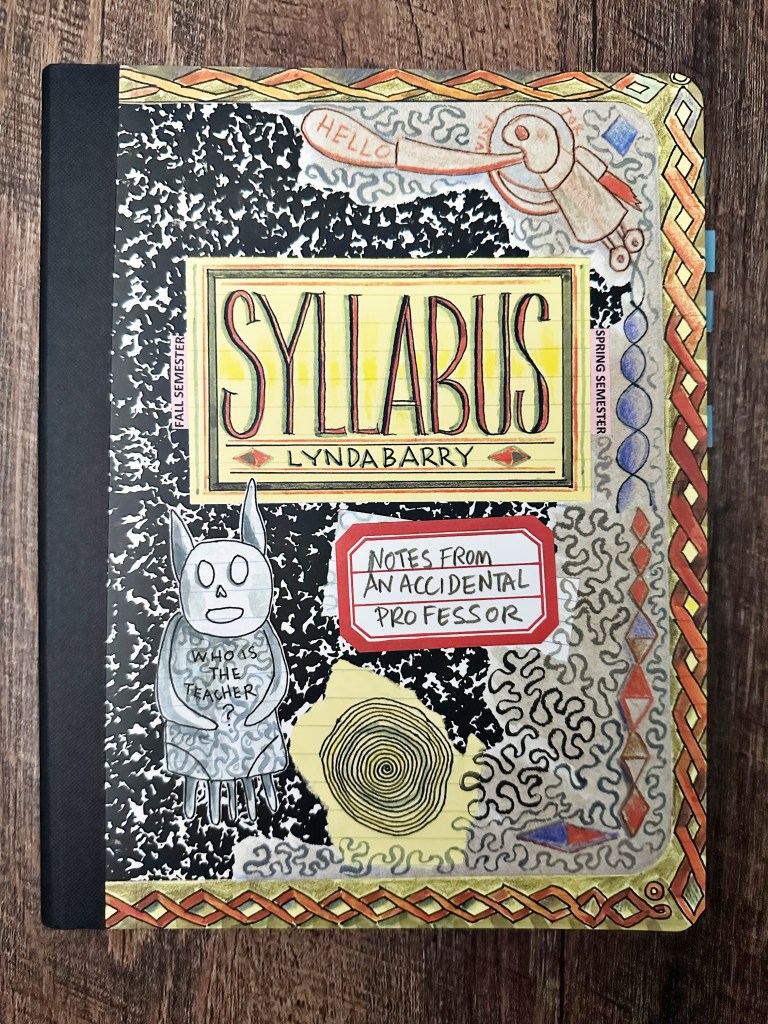
As Barry says in her lovely book Syllabus, “What goes into your diary are things that you noticed when you became present — that is to say when the hamster wheel of thoughts and plans and worries stopped long enough for your to notice where you were and what was going on around you.”
When I do this exercise consistently, I’m surprised at how it hones my powers of noticing. Even now, when I go back through the entries even months later, I can “see” most of the things I wrote down.
I am recommitting to this practice, the practice of noticing and paying attention and then writing it down, today.
“Once I decided to keep everything in one notebook I found a partner and participant in keeping the words and pictures and ephemera that are part of day to day life. That feeling I have about wanting to write something or draw something or make notes about something or glue something down— my composition notebook holds all of it. It’s a place. A time and space.”
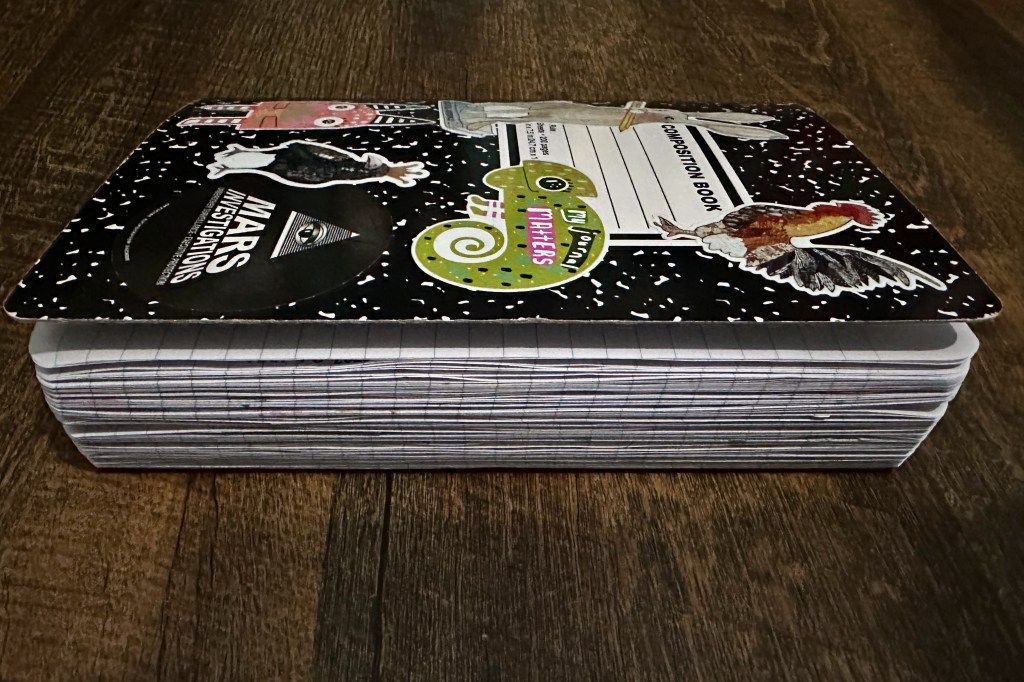
I have been keeping a creative notebook in a composition notebook for over a year. I was first inspired to do so after reading Lynda Barry’s book Syllabus. For most of that time, any handwritten notes went into my notebook. If I was taking an online seminar, the notes went in the book. If I got mail with pretty packaging, it went in the book. If I was upset about my day, my emotions went in the book. If I was planning a party, the lists went in the book. If I wanted to play with watercolor, swatch new markers, or create a collage, it went in the book.
The end result is undoubtedly greater than the sum of its parts. As it fills, the notebook becomes a unique collection, with the whole becoming so much more than any individual page.
Your creative notebook is a collection of all of your thoughts and writings and drawings and musings. Its power comes from the juxtaposition of all of those different things side by side, page by page. Plus, you not only get the experience of filling it up but also the experience of revisiting it and learning from yourself. (More on that soon.)
I break the one notebook “rule” sometimes. For a while, I tried keeping the creative notebook AND doing daily pages in a Hobonichi Techo Cousin. While I enjoyed doing the pages, it became too much after a while, and I returned to the creative notebook. I also use digital tools like DayOne, Apple Notes, and Bear for daily journaling, random notes, and writing drafts. But any physical notes, lists, outlines, collage, or play goes into the creative notebook. I return again and again to these notebooks.
Keeping one notebook may not work for everyone. Multiple, dedicated notebooks is just as valid and will work better for some and at different times. But keeping one creative notebook is something I recommend you try.
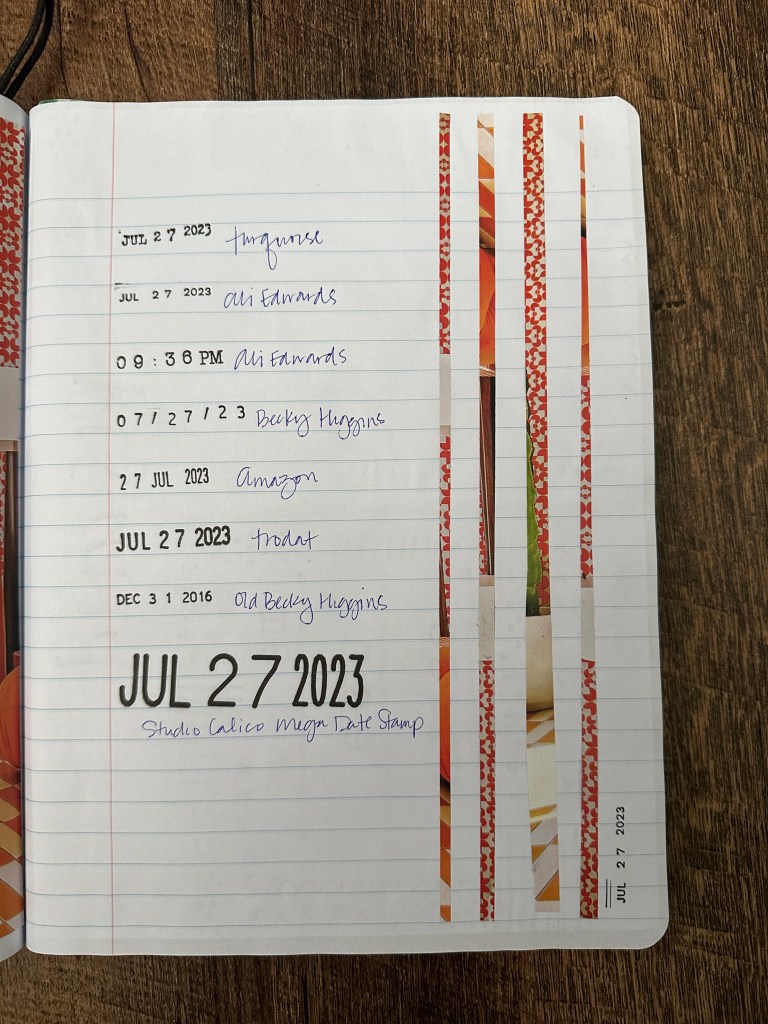
I try to date everything: cards I send or receive, art I make, kid art and school stuff. I’m never sorry to have the date on something and often sorry the date is missing, especially in my notebooks.
If you don’t have or want a date stamp, handwriting the date is super easy. But to me, there is something special and graphic about using a date stamp.
This is my current collection of date stamps.
Here is more info if you’re interested in any of these:
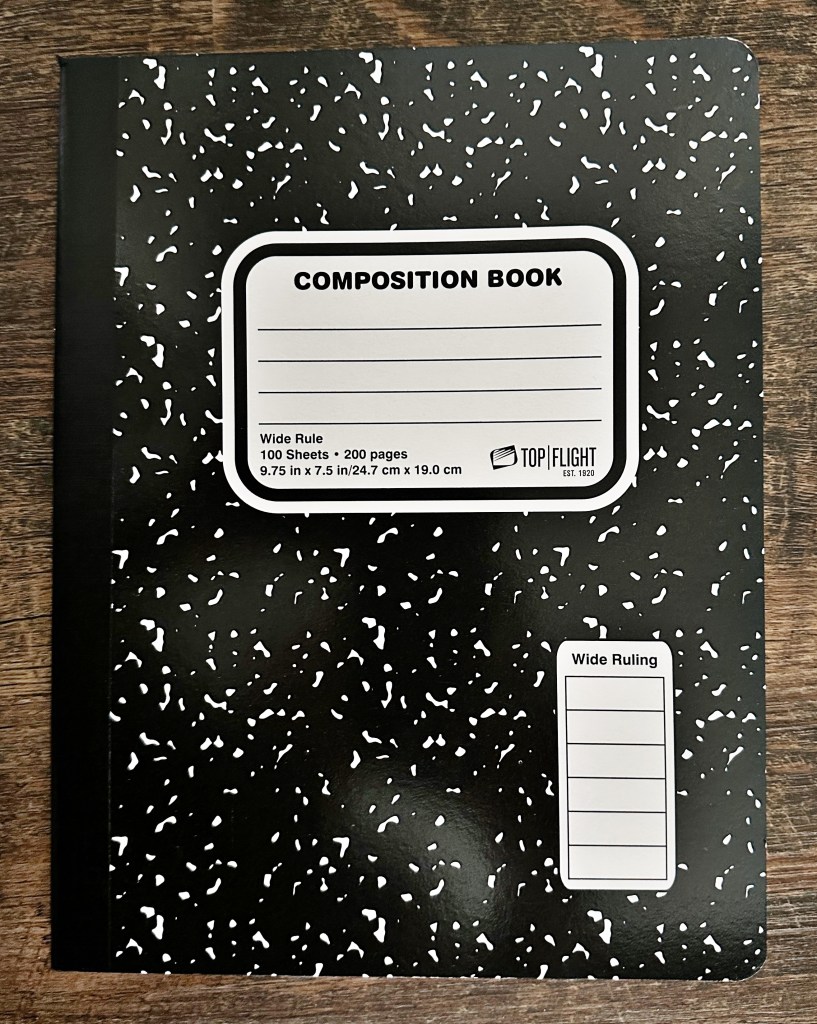
First and foremost, I use a composition notebook for my creative notebook, because Lynda Barry had her students do it in Syllabus. That’s why I started. But I kept it up because it worked for me.
Here are the reasons I love a composition notebook, specifically:
Perfect size. The page size is not too big and it’s not too small. The book itself usually has about 200 pages, which provides plenty of room without being enormous.
Inexpensive. It’s cheap, especially around back to school time (now!), and it’s easy to find.
Low pressure. Because it’s cheap, I don’t feel precious about it. I have very expensive and beautiful notebooks that I don’t use because I feel I need to save them and fill them with only the most beautiful things. Not so with a composition notebook.
Classic look. Let’s appreciate its low-key beauty, shall we?
Sturdy. The pages are sewn in, and it has a hard cover. So it can handle whatever you throw at it.
Easy to use. It can fold back on itself. There are no rings or spirals to get in the way.
Paper. This is thin cheap paper, yes. But I find it is sufficient, even with wet media, if I’m careful. And it’s easy to glue two pages together as needed.
Lines. I also love the lined pages. I can ignore the lines when I want to, but they are there when I need them.
A composition notebook is a cheap and easy way to start a creative notebook, but use whatever works for you. Go smaller; go bigger; go handmade; or go for luxury. The notebook itself does not matter. What matters is putting things – your thoughts and ideas and random life stuff – down on paper.
Keeping a physical creative notebook encourages me to play. I use it for my writing exercises and notes and making lists and creating collages and swatching new supplies. I use it to journal about my feelings and my days (though I do this in other places too). I use it as a scrapbook and glue book. I use it for anything and everything.
creative notebook noun A place to hold your ideas.
Let’s break it down.
First, it’s a place, a holder, a container. It is typically a notebook of some kind. A place to put thoughts and ideas and doodles and whatever else comes up in your life. But it doesn’t have to be one specific physical notebook. Think of the term “creative notebook” as a concept rather than a specific form and make it work for you.
It could be physical. It could be digital.
It could be big. It could be small.
It could be expensive. It could be a few pages of computer paper stapled together.
It could be one notebook. It could be several notebooks.
The physical reality of it is less important than its use.
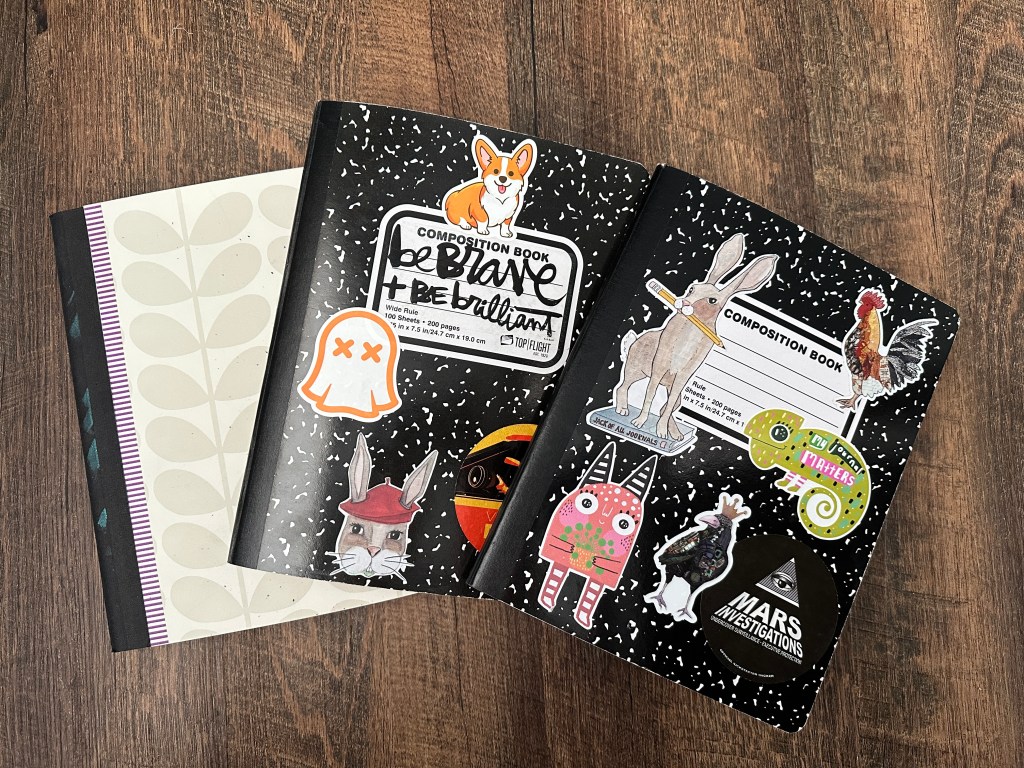
I use one composition notebook at a time. Use whatever works for you.
Three of my recent creative notebooks
Second, it’s for your ideas, your creativity, your life. Creativity can be an intimidating, nebulous word. But again, think of it in broad terms. The “creative” in “creative notebook,” means, to me, the raw materials of life. Your ideas and notes, whatever the context.
It could be for a typically creative endeavor like painting or writing. It could be for your work as a lawyer or project manager or content creator. It could be both. It could be neither.
It could have nothing but words. It could have nothing but images. It could have both.
My creative notebook includes a little bit of everything:
charts
ideas
drafts
research
notes from classes
work notes
free writing about stuff on my mind
swatches
collages
lists
quotes
writing exercises
poetry
brain dumps
diary-like entries
goals
lettering practice
doodles
ephemera from life
any other kind of note or idea I have.
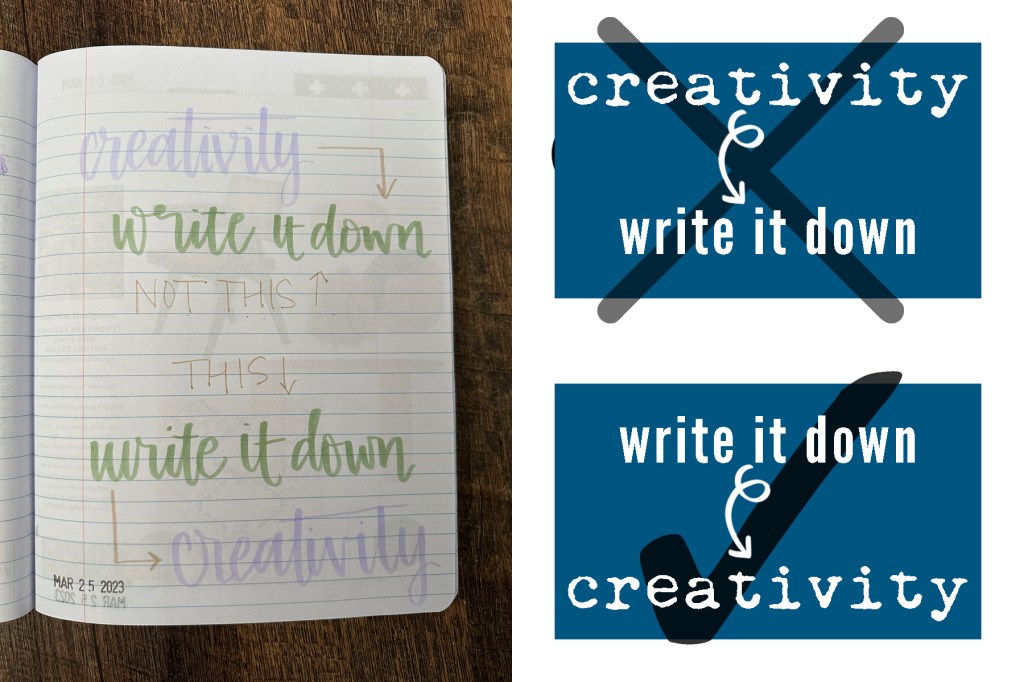
It is not your job to find the creativity and then write it down. It is your job to write it down, and the creativity will emerge.
Practice
Artists call their notebooks sketch books. Writers call them writer’s notebooks or commonplace books. It doesn’t matter what you call it; it matters that you do it.
I recommend starting with putting everything in a designated notebook for a while and see what happens.
The lovely thing about a creative notebook is, if you keep it around and put things into it, the creativity will appear. The mishmash of notes and ideas coalesce, and the whole becomes greater than the sum of its parts. When you see your thoughts and swatches and collages and doodles and lists and whatnot juxtaposed with the others, new connections are made, themes emerge, creativity is found.
Today we’re talking about juxtaposition, and how to use it as a writing tool. Let’s start with a definition.
juxtapose verb To place side by side for the purpose of comparing or contrasting.
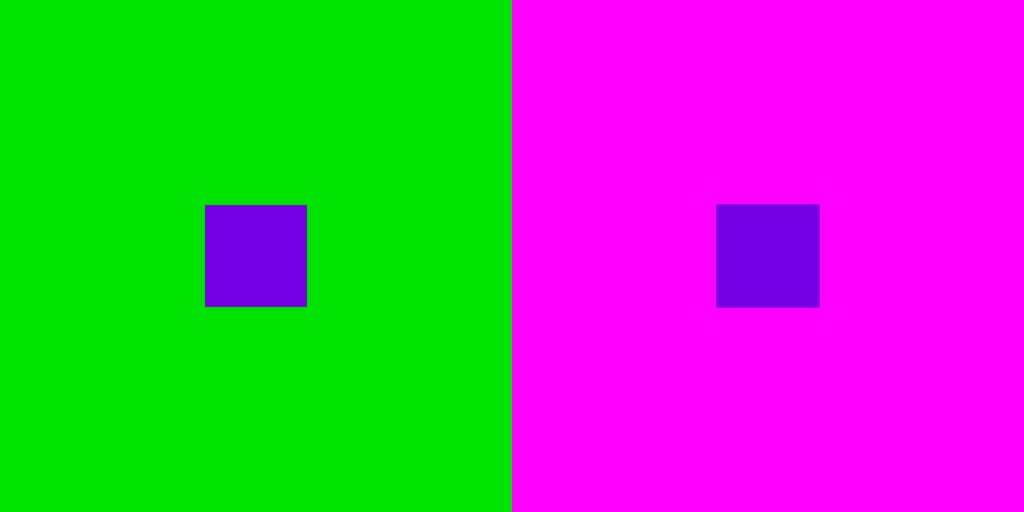
I am fascinated by how the juxtaposition of objects, creatures, or ideas changes our perception of them. Consider, for example, how things change when we see one abandoned can versus a collection of them.
Or what happens when the color purple is surrounded by green versus purple surrounded by pink.
Objects together are different than on their own. It’s the magic of juxtaposition.
Juxtaposition + Writing
How can the concept of juxtaposition help with your writing?
You’ve probably seen and done writing exercises that are one word prompts (car, party, etc.). These are simple and effective. But, given the magic of juxtaposition and the fact that our brains are wired to make connections, let’s try an exercise with two items. Ready? Let’s play.
SUPPLY LIST
Your notebook. I usually use three pages for this, the first two divided into four sections each and the third one blank.
A writing instrument.
Two items to compare. Literally anything goes here. Really. You can use anything you can think of. Abstract ideas, animals, activities, physical or digital things, etc. You do not need to have physical items.
Your two items can be in the same general realm, like baseball and gymnastics or peaches and apples.
Or distinct, like a mug and Barbie or a chair and an elm tree.
They can be totally different, like a rock and the Theory of Relativity or Game of Thrones and an app.
They can be two types of the same thing, like two different books or two bands.
They can be debated topics, like ebooks versus physical books or pizza with pineapple versus pizza without pineapple.
Any two items will work.
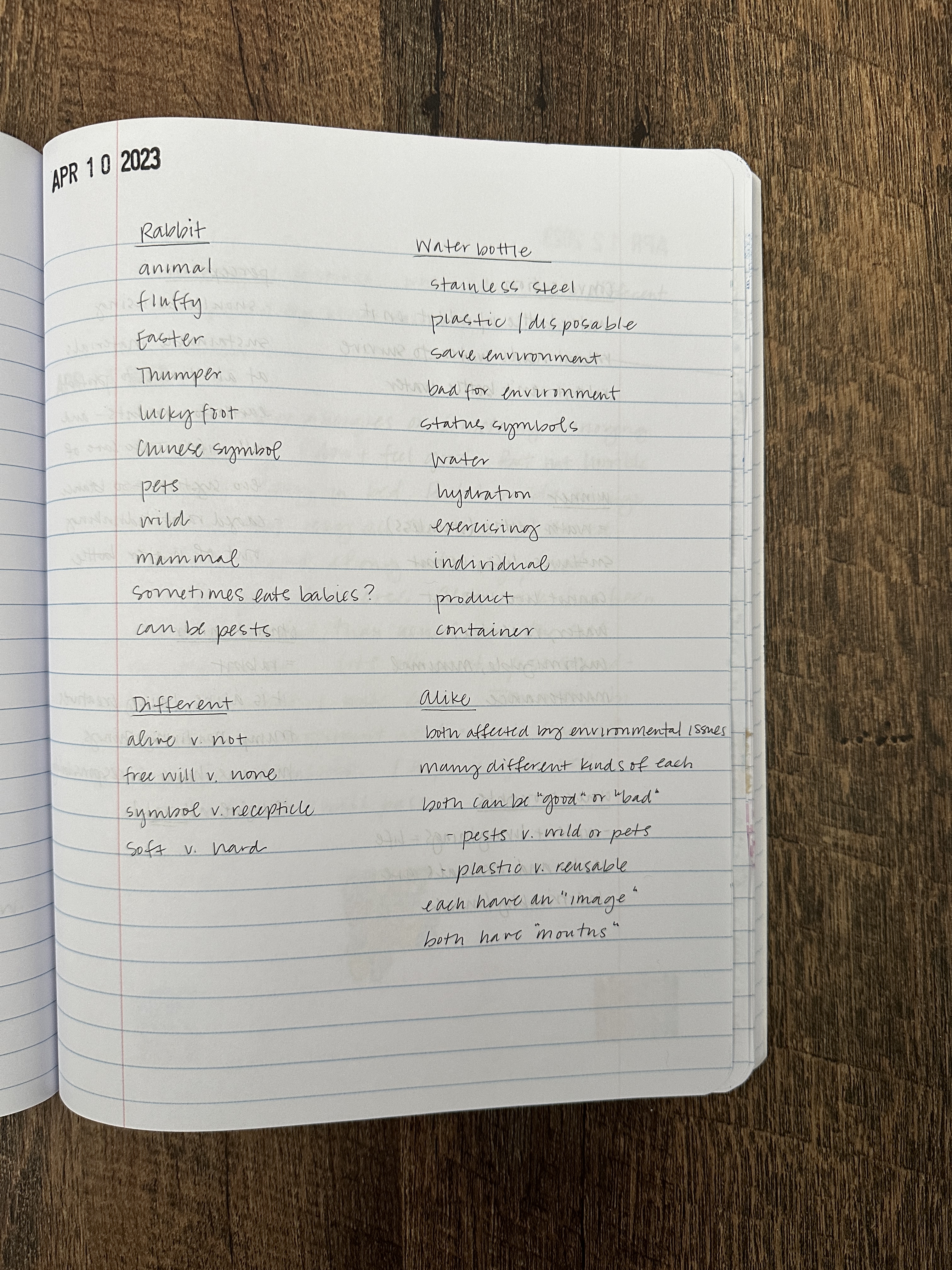
For this example, we’re going to use rabbit and water bottle. You’ve got your notebook handy, no? Then let’s move on to the steps of the exercise itself.
THE STEPS
1. Write 5-10 things about each individual item. It’s a good idea to spend some time with each of the items individually before considering them together. Make a quick list of the general attributes of each item and anything it makes you think of. Note that you could pick a specific rabbit and water bottle, you could consider the categories of rabbits and water bottles as a whole, or you could do both.
2. Juxtapose the items, and respond to six questions. Now let’s consider the items together. Mentally (or physically if you want) place the two items side by side.
From here, let’s answer a few questions in pairs, shooting for 3-5 responses to each one. First, these two:
How are the two items different?
How are the two items alike?
This can feel a little silly, but push yourself to find 3-5 differences and 3-5 similarities. Compare color, shape, material, biology, texture, function, etc.
Next, these two questions:
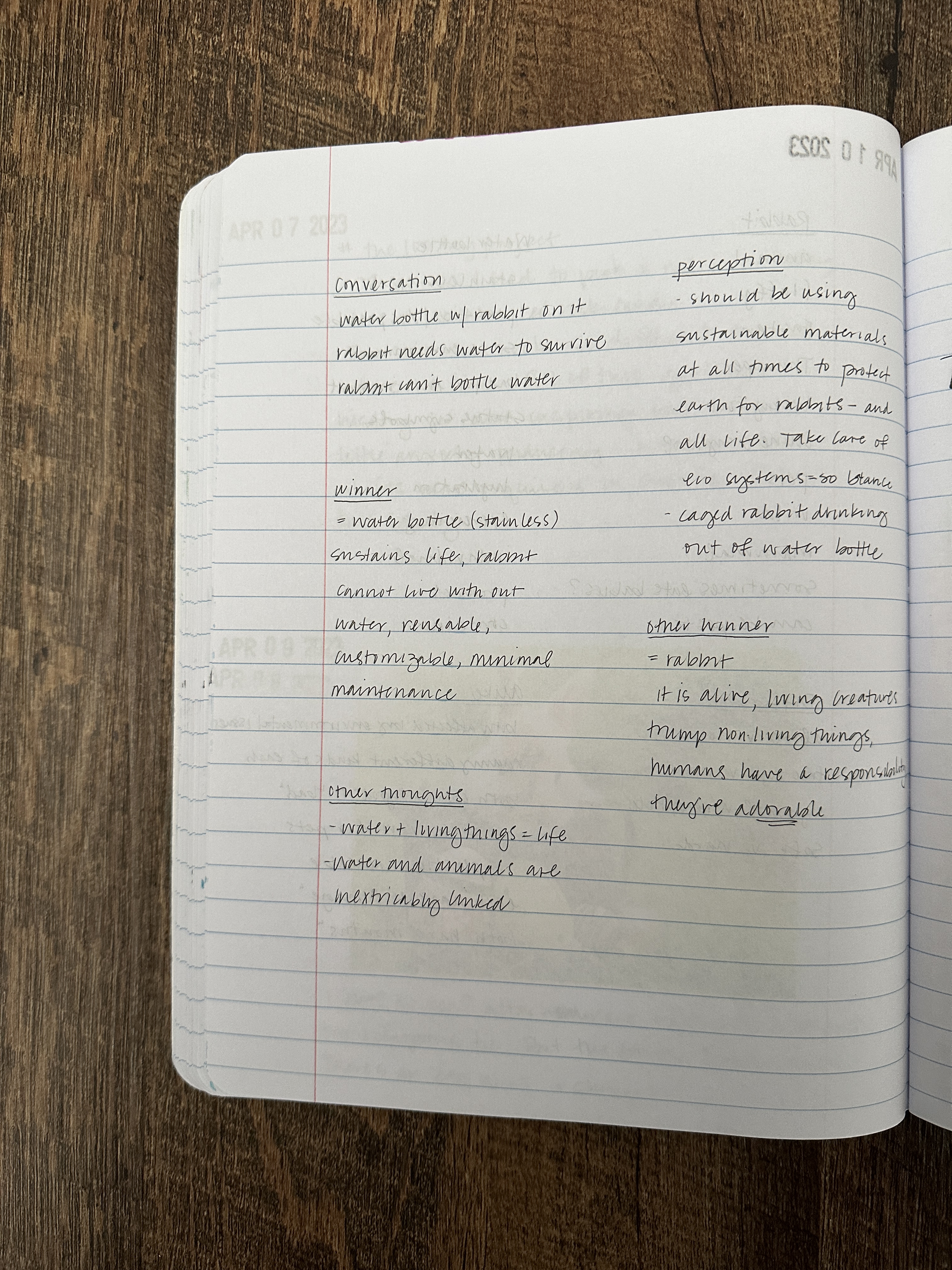
How are the two items in conversation with each other?
Do the two items together change your perception of either individual?
While these two questions are similar, they can result in very different responses. For the first question, I focus on the words. I put the two items in conversation with each other by considering the words together: “rabbit water bottle.” What does that make me think of? Then I switch the order: “water bottle rabbit.” How does that change things? I write down anything that comes to mind, trying not to edit my thoughts.
For the second question, I focus on the visuals, seeing if, like the color example above, my perception changes when the two items are physically next to each other. I visualize the rabbit next to the water bottle. Write down my impressions. Then I consider the water bottle next to the rabbit.
And, finally, these two questions.
If you had to pick one item to “win,” which would it be and why?
If you had to pick the other item to “win,” what would be the basis?
This is an excellent mental exercise, forcing you to choose criteria with which to judge one item against another, and then forcing you to argue the other way. Any criteria goes. One is bigger, smaller, or cuter. One is more complex, simple, or elegant. One is more alive, important, or fun. Or, you just plain like it better. Whichever item you select to win, the important thing is the reasoning behind it.
Here is a look at my responses to Steps 1 and 2:
3. Pick something to write a page about. Look over the things you have written and circle 1-3 ideas that sparked during the first two steps. Then write about one or more of those sparks.
I find that this juxtaposition exercise stretches the mental muscles in a satisfying way, bringing in description and persuasion and critical thinking and often resulting in interesting insights.
If you try out this exercise, please share your experience in the comments. Thanks for playing today.
My fourth grader recently had to submit a book report on a book of at least 150 pages. The assignment required typing out the responses to 10 form questions and drawing an image or scene from the book. I looked at the form and thought, I can do that. I mean, obviously. But I found it to be an interesting exercise. Here is the result. Note that there are some spoilers.
01. Title: The Water Dancer
02. Author: Ta-Nehisi Coates
03. Genre: Historical fiction with fantasy elements
04. Main Characters:
Hiram “Hi” Walker. Hi is a slave working in the fields at Lockless. He is the son of the master of Lockless and a slave woman who was sold away when he was nine. He ultimately becomes a house slave and then a field worker for the Underground.
Howell Walker. Howell is the master of Lockless and Hi’s father. He sees that Hi has talent but cannot see that his white son, Maynard, lacks it. Howell is to be the last master of Lockless.
Thena: Thena is a slave women who takes in Hi after his mother is sold away. Her husband died and her children were sold away from her.
Sofia: Sofia is a slave woman on Lockless who knows how to water dance, like Hi’s mother, and is the particular favorite of a nearby master. Hi falls for her and convinces her to attempt running away.
05. Setting:The Water Dancer takes place primarily in Virginia on a plantation known as Lockless in the mid-1800s. But parts of the story also occur at different places in Virgina and in Pennsylvania.
06. Plot: Hi shifts from a lost little boy without his mother to a field hand and then to a house slave. He is Tasked with serving his father and his white brother and has a magical experience when the carriage he is driving goes off of a bridge. His brother is carried off by the river, but Hi finds himself conducted to safety. Thereafter, he convinces Sofia to run away with him, and they walk into a trap. Hi is obtained, tortured, and trained to be a field agent by members of the Underground. He attempts to hone his powers of Conduction and even learns a bit from Harriet Tubman. He lives in Pennsylvania for a while until duty to the Underground calls him back to Lockless where he finds Sofia, Thena, and information sufficient for the Underground to take control of Lockless.
From Harriet Tubman: “To remember, friend,” she said. “For memory is the chariot, and memory is the way, and memory is bridge from the curse of slavery to the boon of freedom.” (271)
07. Problem: Hundreds of thousands of people are Tasked, enslaved.
08 Solution: Part of the solution was the Underground. Part of the solution was Hi’s development of his powers of Conduction (and Harriet Tubman’s powers of Conduction, etc.) and of information useful to the Underground. But for many people under slavery, there was no solution. Mothers and fathers and children were sold away from each other, their labor used to benefit their owners and never themselves.
09. Author’s Purpose: I think the author’s purpose was to illustrate just how barbaric slavery was both on a large scale and for each individual. As Hi observes:
“It is hard to convey this now, for it was another time replete with its own rituals, choreography, and manners among the classes and subclasses of Quality, Tasked, and Low. There were things you said and did not, and what you did marked your place in the ranks. The Quality, for instance, did not inquire on the inner workings of their “people.” They knew our names and they knew our parents. But they did not knowus, because not knowing was essential to their power. To sell a child right from under his mother, you must know that mother only in the thinnest way possible.” (83)
10. Recommendation: I would recommend this book to a friend with some caveats. Coates is a powerful writer, particularly about racism. And I therefore found this book to be the most powerful when it was commentating on the power structures that surrounded slavery. But had large sections that lagged, and the use of magical realism seemed unnecessary to the plot. Still, I liked the characters, and the commentary on slavery, as an institution and a daily reality, was insightful and harrowing.
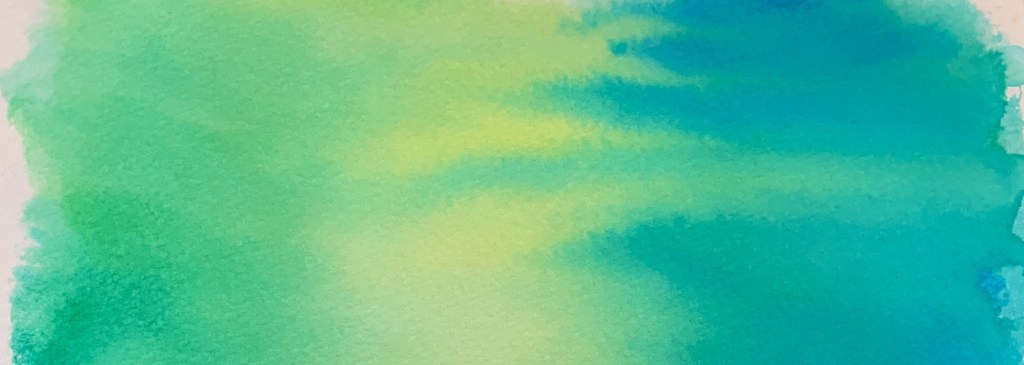
Picture: I played with watercolors and imagined the blues and greens of Conduction meeting.
I just finished The Hunger, by Alma Katsu, and I couldn’t help but see signs and omens everywhere, particularly since they were explicitly mentioned in the text itself.
In this book, the ill-fated Donner Party meets starvation and cannibalism and something else; they are stalked by what appear to be human-like wolves. A sense of foreboding haunts every page. And, as you’ll see in our chosen passage, the company’s bad fortune and disastrous end are foreshadowed from the beginning.
Let’s begin, as always, with the text. Here’s today’s passage:
The wagon train had already suffered misfortune after misfortune: signs, all of them, if you knew how to interpret them. Just last week, she opened a barrel of flour to find it infested with weevils. It had to be thrown out, of course, an expensive loss. The following night, a woman–Philippine Keseberg, young wife to one of the less savory men on the wagon train–had delivered stillborn. Tamsen grimaced, remembering how the darkness of the prairie seemed to enfold the woman’s wailing, trapping it in the air around them.
Then there were the wolves following them; one family lost its entire supply of dried meat to them, and the wolves had even carried off a squealing newborn calf.
And now, a boy was missing.
“The wolves,” Tamsen said. She hadn’t meant to connect the two incidents, but she couldn’t help it.
This passage appears on page 19 and portends the events in the remainder of the book. All of these disparate elements are linked. But let’s look more closely at the idea that these initial misfortunes suffered by the wagon train were “signs, all of them, if you knew how to interpret them.” There are four signs Tamsen delineates:
A barrel of flour infested with weevils
A stillborn child delivered by the wife of an unsavory man
Wolves stalking the wagon train
A child that went missing in the night
How can we interpret each of these signs? What do they mean? I thought I’d look to another text to add to the discussion. Enter 10,000 Dreams Interpreted, by Gustavus Hindman Miller. While we are taking these out of the dream context, I think looking at these signs as symbols can help guide our reading of the text.
First up, weevils. Weevils are beetles, and a beetle “denotes poverty and small ills.” Flour on the other hand “denotes a frugal but happy life.” Next is a stillborn child, a sad and ill omen on its own, but it also “denotes that some distressing incident will come before your notice.” Third is the pack of wolves stalking the wagon train and setting upon a newborn calf. A wolf devouring a lamb is said to denote that “innocent people will suffer at the hands of insinuating and designing villains.” Finally, losing a child in the darkness “portends many provocations to wrath” and that “trials in business and love will beset you.”
It doesn’t take a seer to read the signs above; they all point to bad, bad luck. However, delving into the signs as symbols adds meaning to the text. The image of the weevil contaminating the flour is a metaphor for poverty and small ills contaminating a frugal but happy life. The wagon train company starts out frugal and happy and hopeful, but misfortune haunts them and poverty (of rations and kindness) and other small ills contaminate their community.
The stillborn child portends that distressing incidents will come before your notice. Distressing incidents are, indeed, already upon the Donner/Reed Party. The stillborn child could be a metaphor for the wagon train itself. Everything is ready, they have started on their journey, and yet it will all come to naught. The wailing of the mother and the unsavory father of the stillborn child add even more despair to the description. This child, like the next, was lost in the night, and the company, too, will be lost in darkness.
The missing child portends trials to come. Indeed, trial upon trial will be heaped upon this group as it fractures and splinters. The newborn calf, innocent children, and the ill in the party succumb first. But the evil (be it disease, human, or supernatural) does not stop once the weak are gone. The idea that the loss of a child means you will be provoked to wrath also plays out in the story. As times get more desperate, as rations are depleted and the winter approaches, wrath and fear appear throughout the company.
Finally, the wolves descending in the story actually are and represent insinuating and designing villains. In this story there are many in the party who see themselves as villains because of their past desires or sins or perceived sins. And then there are those in the party who actually are villains, who plot against the others and attempt to manipulate the situation to their own benefit. But one of the things I enjoyed most about the book is that it explores the vast areas of gray. The monsters have redeeming qualities. The heroes have sinned. Life is fraught and complicated and beautiful.
How do you interpret the signs in the text? What else do you see in this passage?




 Textual Play